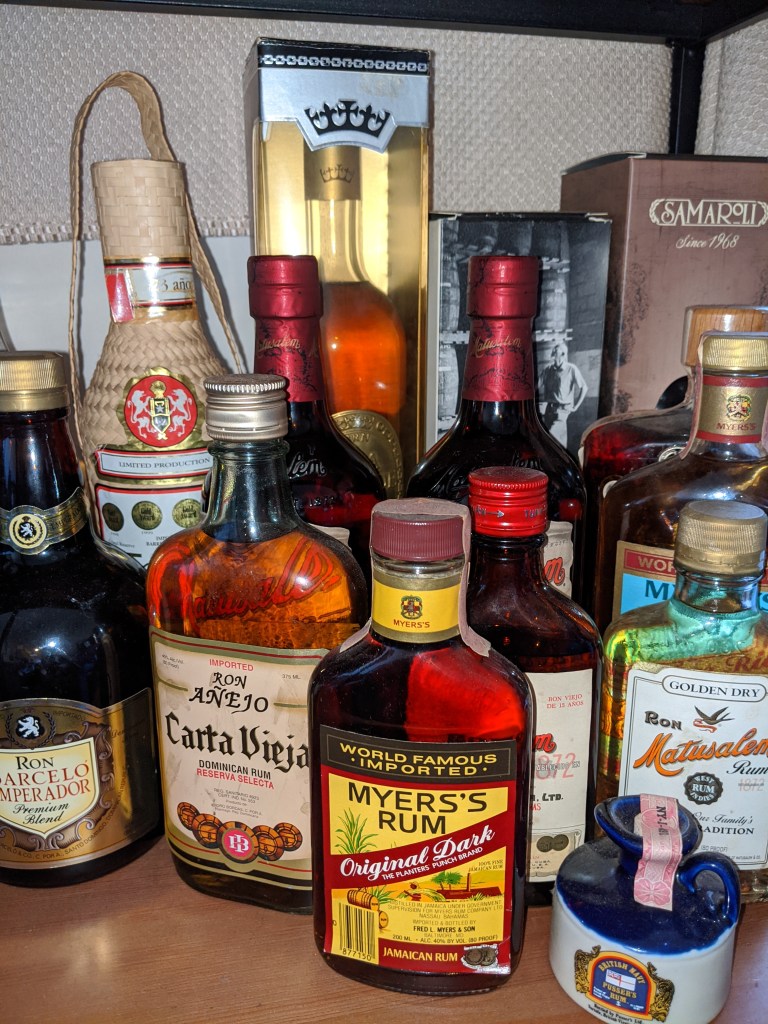
Here at BVBS you will find long-form narratives on dusty hunting, bringing your own bar to your favorite BYOB, and how do pair your favorite rums with food at home.
Locations: NYC Metro area and the Wilds of Pennsylvania
Live once, drink daily.
Bon Vivant Bottle Salvage. What?
1.) Live and love as much as and well as circumstances allow.
2.) Bottles forgotten in dangerous or hard to reach places? Not if I’m nearby.
I’ve never lived with the sufferance of an unfillable emptiness in my heart. The real threat of emptiness, to me, is feeling intellectually empty in the moments when I am not stimulated.
There is no darkness as bleak as an empty mind and, save for rare instances of congenital defect, it’s thankfully an entirely preventable phenomena. Everyone has access to an internal deposit of elements, however much pressure applied to it determines what jewels one will yield. Even a pauper can have a rich intellectual life, his or her humble appearance may obscure the jewels of their making from your view. In fact, history has given us no greater aquifer to nourish Mother Earth and her children’s minds than paupers who thought, discovered, pursued, and most importantly, created things.
Among those things created are art, music, food, and drink. I love all of these things deeply and I contend that the greatest contributions to each category came from the bottom tiers and the most exploited of our societies, but for the purposes of this website I’m only qualified to write about the last two topics- food and drink.
Rum, as we know it, was discovered by a group of people placed under more pressure than any other in history. Stolen and enslaved people who survived the Middle Passage discovered that molasses, and likely all of its other relatives such as cane juice, could be fermented into alcohol. The spirit that it would later produce would become specie for the theft and importation of more Africans.
Diamonds aren’t the only jewels with blood on them.
***
It was their way of teaching history to us. My grandparents loved yard sales and flea markets, making lists and organizing, and most importantly telling the story behind each gem they picked up.
“You see this? Toothpaste once came in a jar,” my grandmother would explain, “You don’t want to open it.”
Or, at the sight of a fully articulating model of an old airplane, my grandfather would captivate us with his knowledge of its moving pieces. “This, can you believe this? This is a P-38. It won the Pacific for us. Let me tell you about how this worked,” and a man with an 8th grade education would fascinate me with his mastery of engineering terms and conceptual physics. He knew the answer to every question that I had, and if he didn’t know the answer he’d research it and report back. He had to know it, too. Nothing about his tone or body language would betray that inner quest for knowledge to you- he was blue collar and made no pretensions about it.
And with the American waistline burgeoning from 1950 until the present, they taught me every bit as much about food.
Today I do the same thing with bottles and food on this website. Collect, research, and share- share endlessly, share with love, share with sentiment.
Bloodless jewels for all.
***
This website is not going to be a lifelong pursuit.
For the next year I plan on sharing stories of how I acquired some truly unique bottles in unlikely places. I will be posting between 3 and 6 long-form articles on dusty hunting and in between those articles I will be posting two other related topics: Bringing your own bar to BYOBs and how to pair rum with meals cooked at home.
After a year I plan on going radio silent for some time, collecting more bottles, and returning years later with another 12 months of content.
I am a bon vivant with every breath, but I am a reluctant website and blog writer.
 Bon Vivant Bottle Salvage